
Middle School and High School Support Structure
Follow this link for a list of Roles and Responsibilities and common ISNS Terminology.
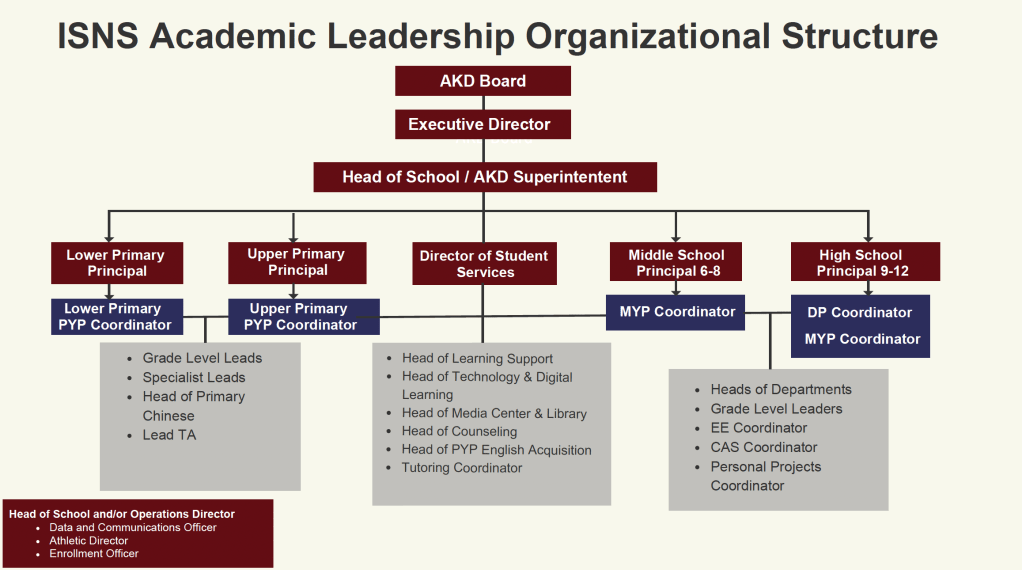
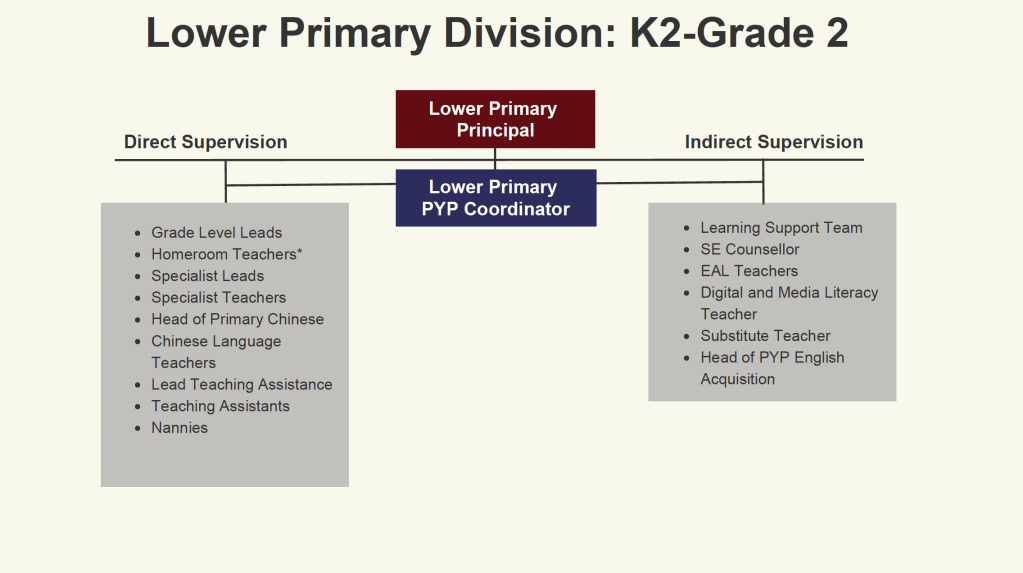
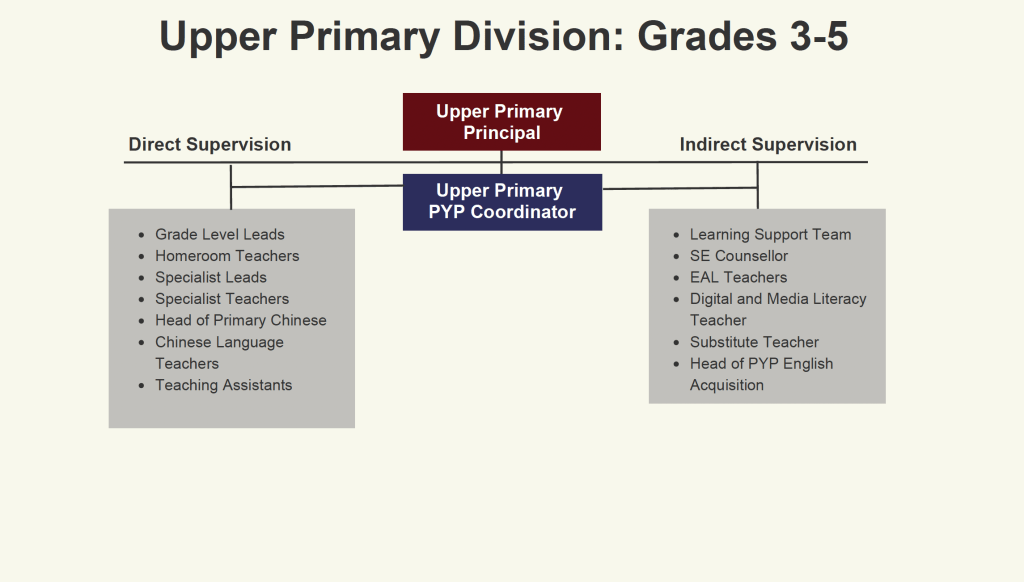
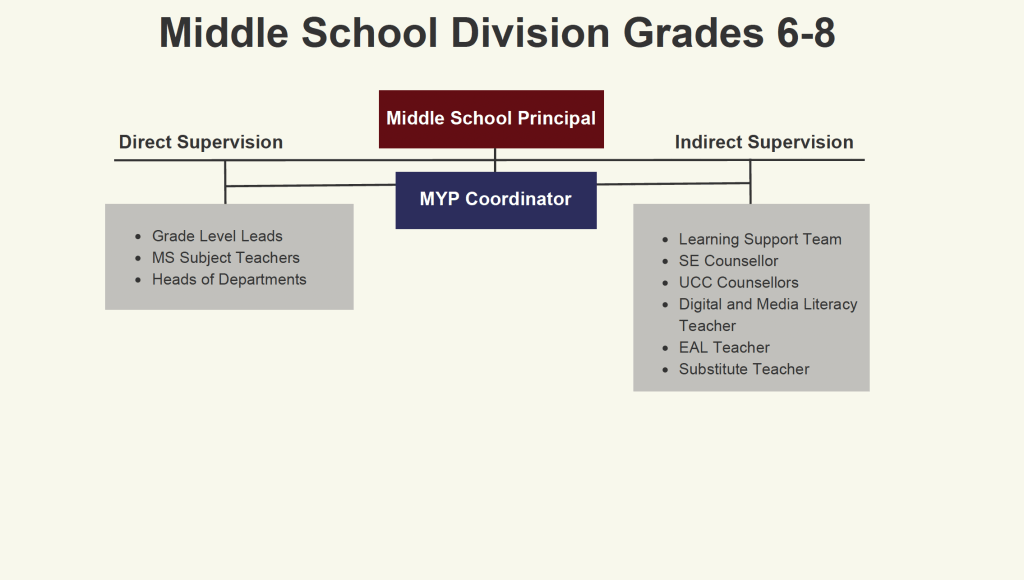
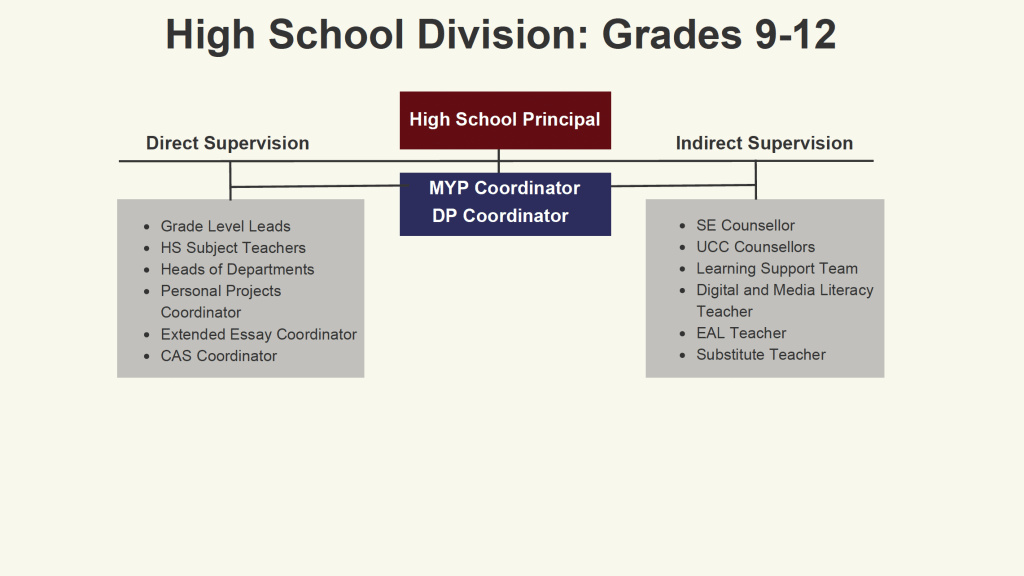
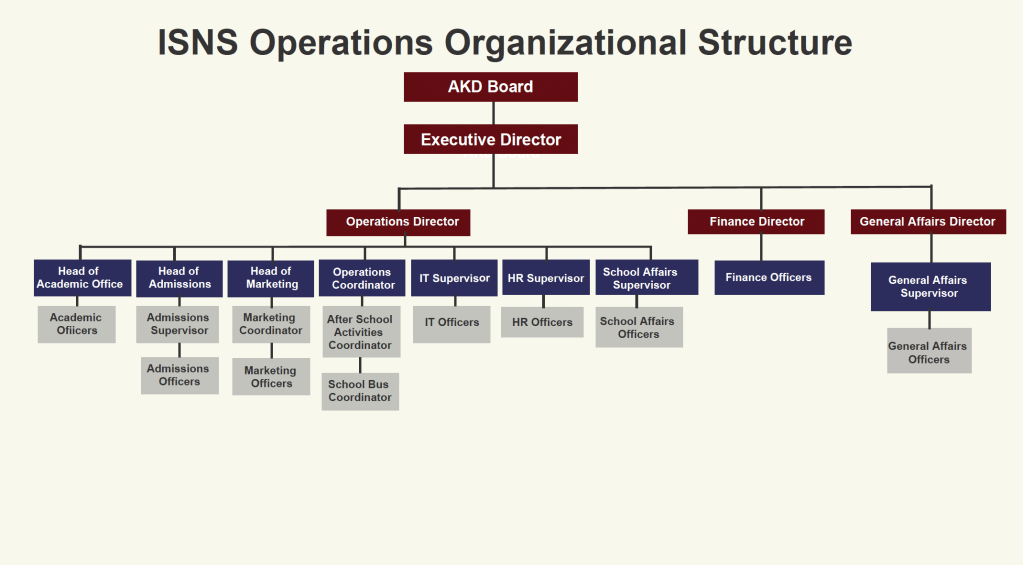
The organization structure at ISNS is a hierarchical project management model with functional divisions, like a strong matrix or functional organizational structure commonly used in large, multi-department organizations.
The Head of Schooloverseeing the entire “program” and ensuring alignment across multiple sub-projects (divisions). Each school division—Lower Primary, Upper Primary, Middle School, and High School—functions like a major project stream led by a Principal. These division leaders manage implementation within their scope while coordinating with IB Coordinators (PYP, MYP, DP), Grade Level Leads, and Heads of Departments, who act like workstream leads or functional team managers.
The distinction between direct and indirect supervision mirrors formal project reporting structures. Direct supervision represents clear accountability lines, while indirect supervision reflects cross-functional collaboration—similar to a matrix model where individuals may report operationally to one leader but collaborate across departments for program delivery.
Specialized roles such as Learning Support, Counseling, EAL, Technology & Digital Learning, CAS, Extended Essay, and Personal Projects function as leads within a project environment. They may provide targeted expertise across multiple divisions, much like centralized technical teams in a matrix structure.
The Operations Organizational Structure functions in a similar manner. Under the Operations, Finance, and General Affairs Directors, departments such as Admissions, Marketing, IT, HR, Finance, and Transportation provide logistical, financial, and administrative infrastructure. These operational teams support the “project delivery” side (academics) without being embedded in the instructional chain of command.
Overall, the structure represents a functional-hierarchical structure with matrix characteristics, where:
- Strategic oversight sits at the top (Board/Executive Director/Superintendent)
- Program and Operational leadership, coordinates multiple divisions (Head of School)
- Division leaders manage implementation (Principals)
- Functional specialists support across divisions (Middle Leaders)
- Operational departments provide infrastructure (Operations/Finance/HR)
In project management terms, ISNS operates like a large, multi-phase program with parallel workstreams, centralized governance, and clearly defined reporting and accountability lines to ensure coordination, risk control, and resource alignment.
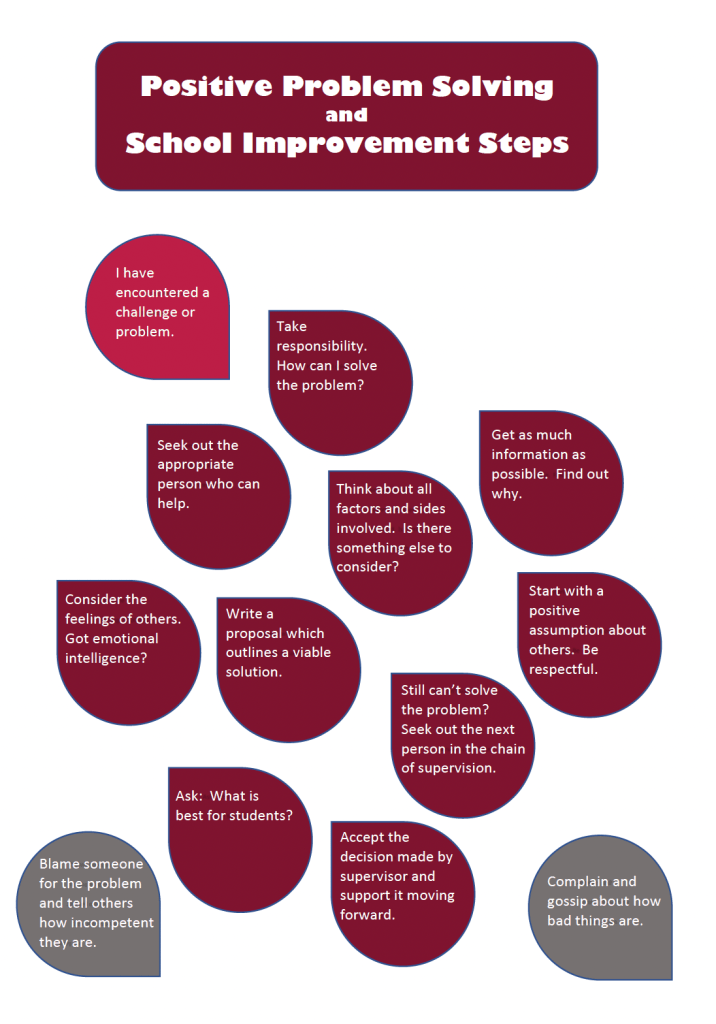
Communication Flow
Information should be passed and issues should discussed following the lines of the organizational chart. Communication should flow up and down the organizational structure in sequence.
The first point of contact for teachers when communicating should be the teacher’s Team Lead or Department Head.
The second point of contact, if the Team Lead or Department Head is not be able to provide the information or resolve the issue, is the relevant IB Coordinator. The Coordinator is the main point of contact for curricular and IB issues.
The third point of contact is the Principal or Director of Program Development.
The fourth point of contact is the Head of School.
Issues that are non-academic in nature, such as a cleaning or repair problem, should be directed to the appropriate Operations Department. The Head of School will help to resolve any issues involving the Operations Team.
Director of Operations and Finance is responsible for all school support staff in the Academic Office, School Affairs, General Affairs, and Finance.

